Resonator Guitar Project

IMG_2647IMG_2641IMG_2646

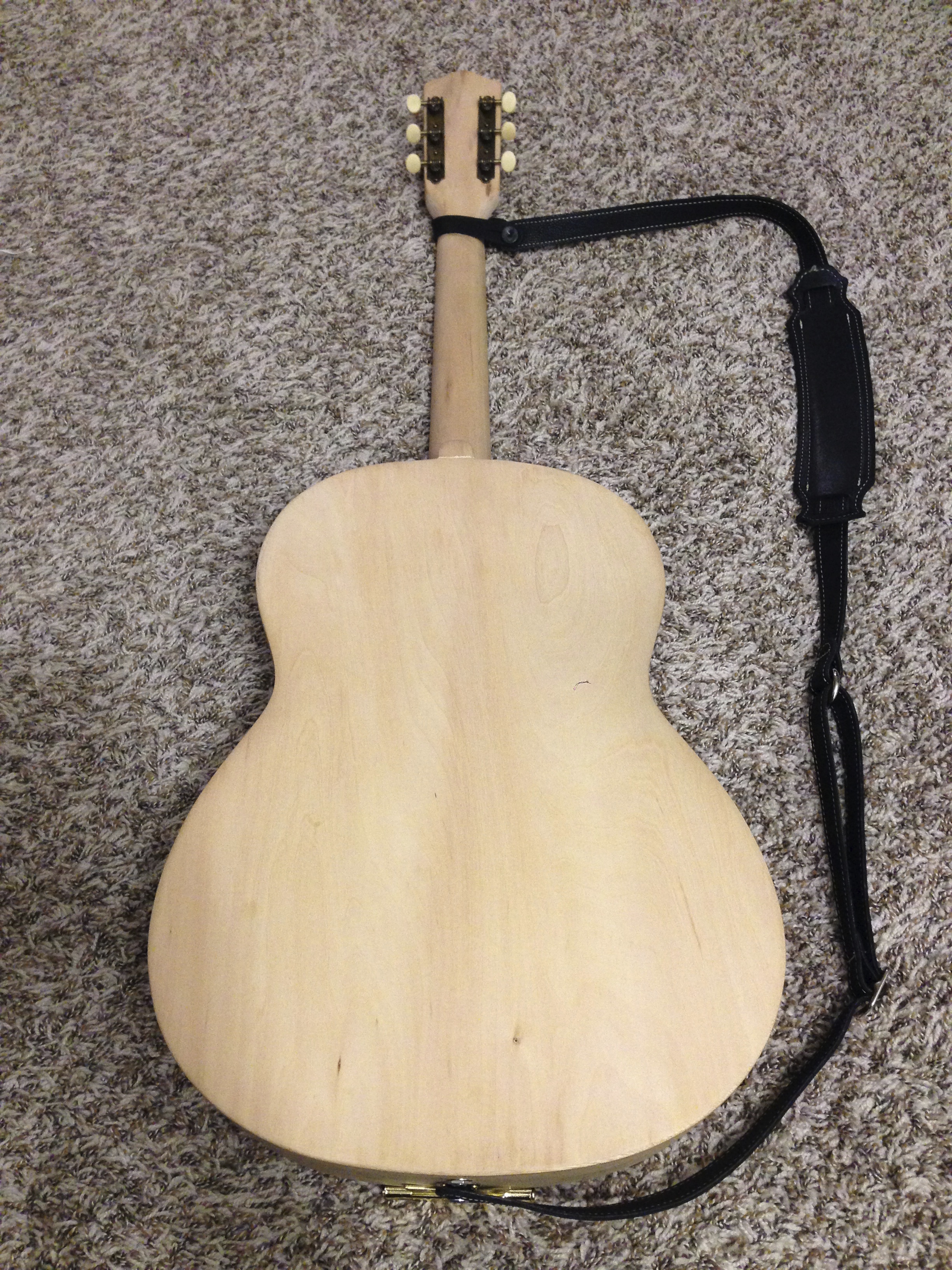
I had been considering this idea for over a year and knew this acoustic would be an excellent candidate when I picked it up at a local antique mall for under fifteen dollars. I found the stove drip pan and two small drains early on and fabbed the stainless steel cat bowl with a pair of tin snips and a grinding wheel a couple of months before starting.

IMG_2560 IMG_2561 IMG_2568

I measured the drip pan and then found the center of the guitar. Using painter’s tape. I marked the vertical center and then placed the drip pan on the guitar to find the correct position. I marked the horizontal cross point with painters tape.

I placed a large adjustable compass on the center mark created by the tape and traced a circle. Then, I peeled the tape off and completed the circle. To cut the large hole, I drilled a couple of starter holes and then carefully cut along the reference line with a mini hacksaw.

I had two small 1-1/4” drains that if felt would look cool as sound hole inserts and their 1-1/4” depth would keep the switches beneath the guitar’s surface. I located the bracing beneath and found a happy medium between the pick guard, bracing, and outer edge of the guitar. A 1-1/4” spade bit made a quick hole on each side.

I took all of the finish off—head, body, neck, fretboard; everything—with 120 grit sandpaper and followed up with 600 grit sandpaper to smooth the wood. I also polished the brass frets, which turned out to be a nice feature. I had planned to apply a vinegar and steel wool mixture that creates a rustic finish, but decided instead to leave it natural.

IMG_2645 IMG_2741

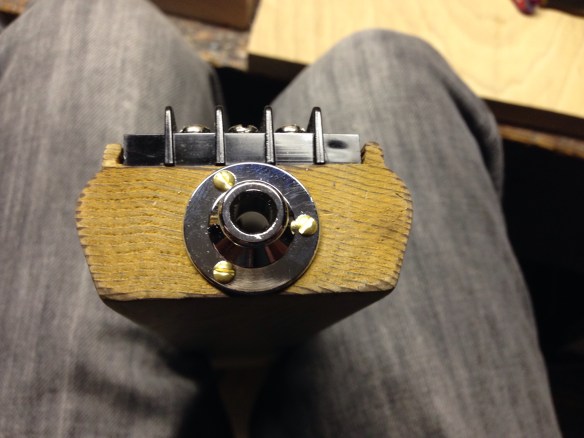
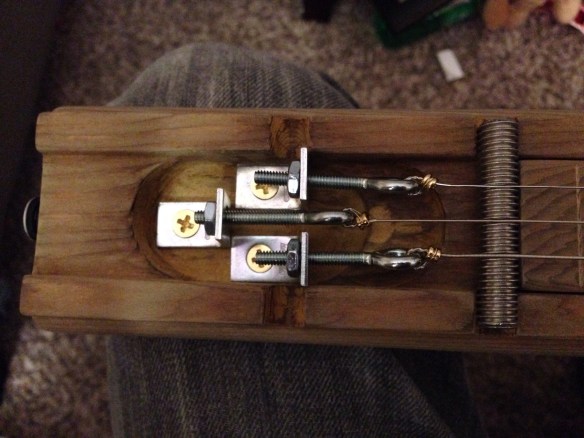
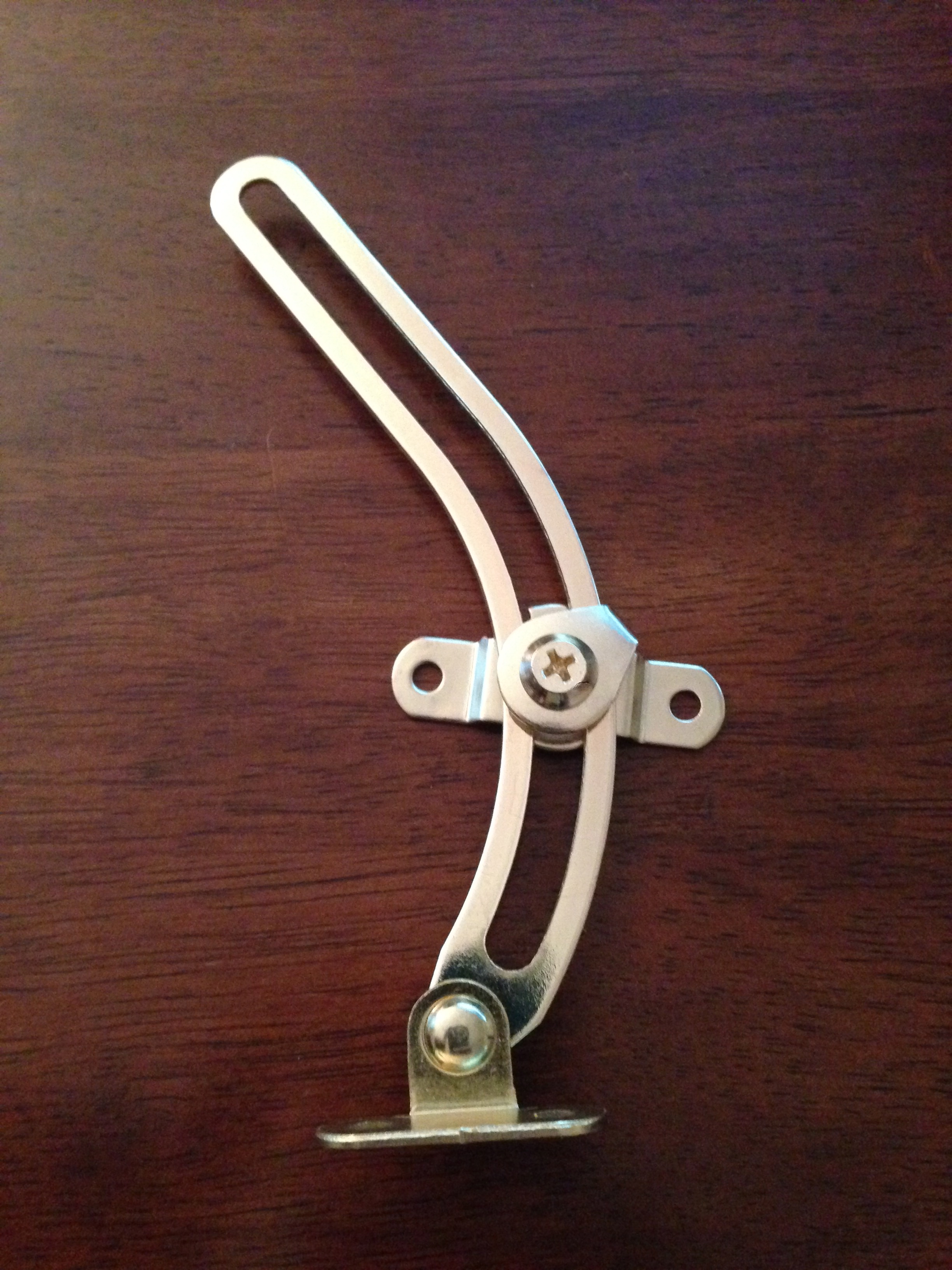
I filed small notches for six strings in a 3-1/2” hinge, lined it up with the fret board, and then installed it. I had found a brass friction lid support that would make an awesome tremolo arm—I cut the extra material away and fabbed the nut plate. Additionally, I added a 1/4 mono endpin for the strap and a 1/4” stereo jack. By that time, my new tuners had arrived, so I installed them, screwed the drip pan down, notched the cat bowl with a round file, cut a brass bolt to length for the bridge, and strung it up. It tuned well and strobing was as easy as moving the cat bowl.

IMG_2569 IMG_2588 IMG_2587 IMG_2586

I began working on the pickup and had found a nickel plated drain cover that seemed like it would serve both as a cool looking cover for the sound hole and a stable acoustic pickup adapter. I bought a mounting bracket that usually holds lights to the ceiling in a junction box and cut off the cross piece. I found brass screws that would thread into the mounting bracket, added some springs to each side, cut a rectangular hole for the pickup and installed it on the guitar.
IMG_1810 photo 5 IMG_2643 IMG_2334

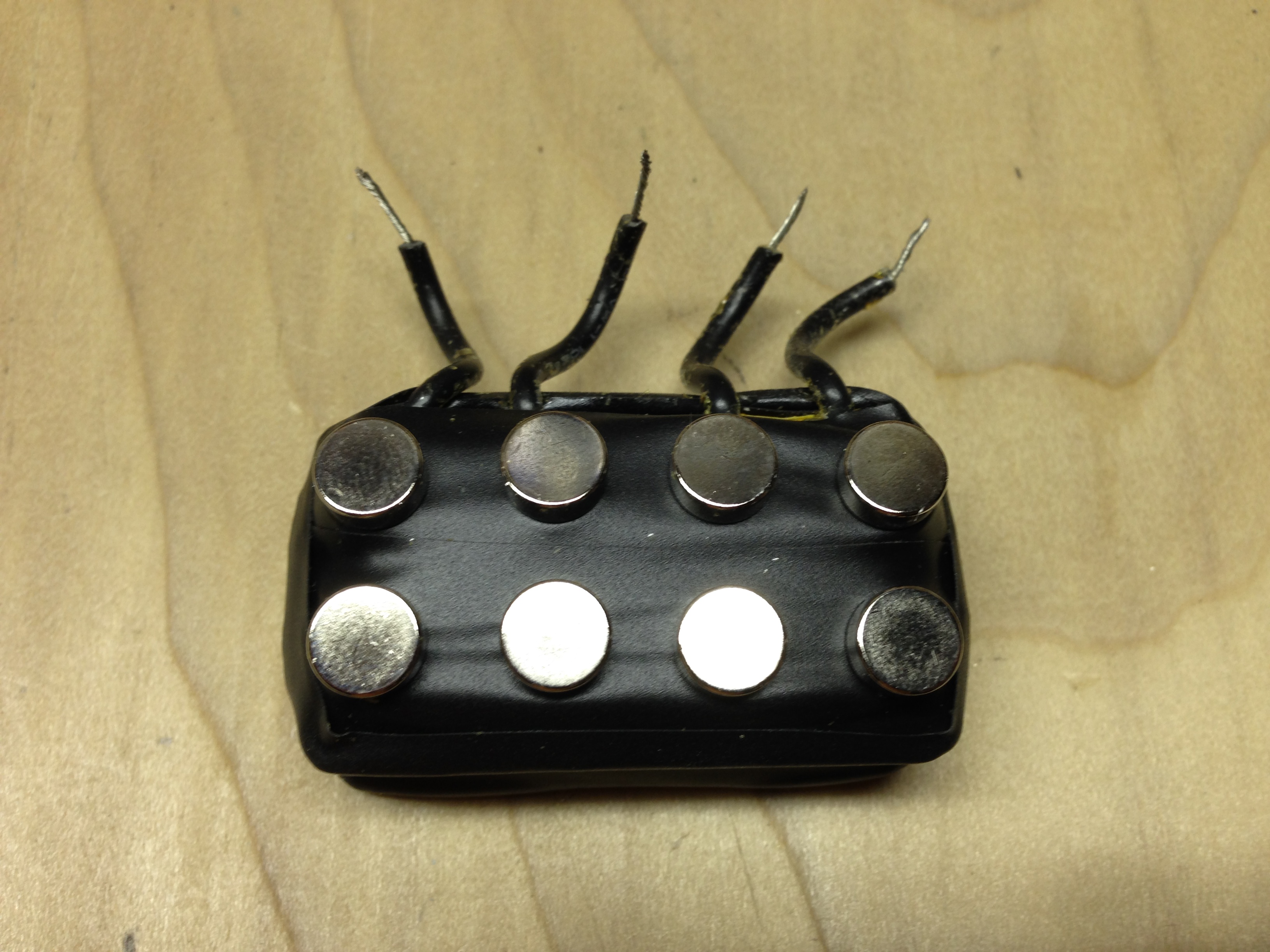
The pickup is made of two power adapters, four picture hangers, eighteen neodymium magnets, and electrical tape. If you would like more information on how to make one please follow the link below:

9 Volt Power Adapter Guitar Pickup

These make excellent replacement pickups for electric guitars, are a practical way to amplify an acoustic guitar, and half of a pickup is perfect for a three string cigar box guitar. If each side is wired independently, as was the case with the electric and acoustic guitars pictured, a stereo effect can be achieved, which sounds pretty cool.

I’ve been happy with it’s sound and playability thus far and the semi-high action makes it excellent for playing slide.

IMG_1926

Resonator Guitar and Custom Duct Tape Case Projects

Hi,

I apologize for my absence. I went back to school over the summer and am currently working to obtain my teaching certificate, so that I can teach high school English.This has taken much of my time, so I have not been working on projects with detailed instructions—such as the SlipStick and 2×4 slide guitars, which need more time to develop and have roughly 25 steps worth of instructions to create. However, I have been and will continue to work on personal projects that won’t necessarily include detailed instructions, but will include pictures from various steps and general descriptions outlining what I did.

My newest creations are a resonator guitar made from a crappy acoustic that I picked up for under fifteen dollars and a custom guitar case made entirely of cardboard, duct tape, chain, and magnets. Here are some pictures for now. I will offer posts with greater detail soon.

IMG_2702IMG_2701  IMG_2703 IMG_2705

Thanks,

uW5Z0b

Pictures of the Completed SlipStick Carry-on Electric Slide Guitar

Hi, 

I was planning to release the SlipStick Carry-on Electric Slide Guitar mid-March, but I decided to change the overall design dramatically and needed some time to get it right. Previously, the action was extremely high, the wiring was sloppy, and the body was unfinished. 

Although this is not currently a fretted instrument, I want it to feel more like the action on an acoustic guitar setup for slide; therefore, I have lowered the strings, while simplifying the nut/bridge installation and reducing the profile on the tuners. 

The homemade pickup is now recessed and the 1/4″ jack mounted in the wood, thereby allowing the wiring to be run through the inside the body. 

The body is stained with a homemade stain comprised of steel wool and vinegar—a mixture that has been oxidizing in a jar for the past three months. I had tested the solution on a sample piece of wood and was happy with the results, so I brushed It on and it turned out pretty cool.

Here are some pictures of the instrument I finished last night. I’m still making adjustments, but  the pickup is clean/noise free and the action feels nice. Soon the instructions will be complete and the project posted, but until then, here you go:


Jumper Wire Test Box

Hi,

I originally created this test box in preparation for building a portable guitar rig. I had found an old RCA repairman’s vacuum tube box that, if modified, could hold a small tube amplifier, a 10″ Celestion, and a few effects pedals. I’ll likely present this “road rig” as an ongoing, realtime project later this year, but for now I will show you this excellent tool for figuring out complex wiring schemes. 
The box is simple in form; the only criteria I used in choosing the donor box was that it be flat as possible and have a length and width just larger than 8.5×11, so that a sheet of computer paper can be used for a template. To create the template, I used a drawing program from an old software cluster called Apple Works, but you can likely use just about anything.
 IMG_2115 IMG_2119
I tried to make my box as versatile as possible and therefore included two rows of six 1/4″ jacks, one row of switches and one row of RCA jacks (which require the same sized hole and are interchangeable), one row on the bottom for speaker jacks and speciality items, and one row above with pilot holes drilled for expansion. You need not fill all of the holes with components, as it can get quite expensive; it’s better to get a few items to play around with initially, leaving space for project specific components.   
IMG_2116
The pictures are self-explanatory, but the easiest way that I have found to make a box like this is to print the template, tape it to the box as straight as possible using painter’s tape, drill pilot holes with a small bit, remove the template, and then drill the various sized holes for each component. If you like my template (shown below), follow the link to my Google Drive account and download the “jumper wire test box template” file: https://drive.google.com/file/d/0Bz_BJp6_LjKySVVjQTRvVXBZVzA/view?usp=sharing
1UfuUl
The strips of painter’s tape between the components allow you to label each component when wiring for easy removal and reuse; and the jumper wires make experimental wiring a breeze. Simply wire, plug up, test, and rewire if necessary. When you are happy, set up your permanent project box and wire it based upon your tested design.
IMG_2117 IMG_2118
Check out our other fun projects in the menu above and don’t hesitate to comment or contact us if you have questions, concerns, or need advise regarding a project.
Thanks,
uW5Z0b

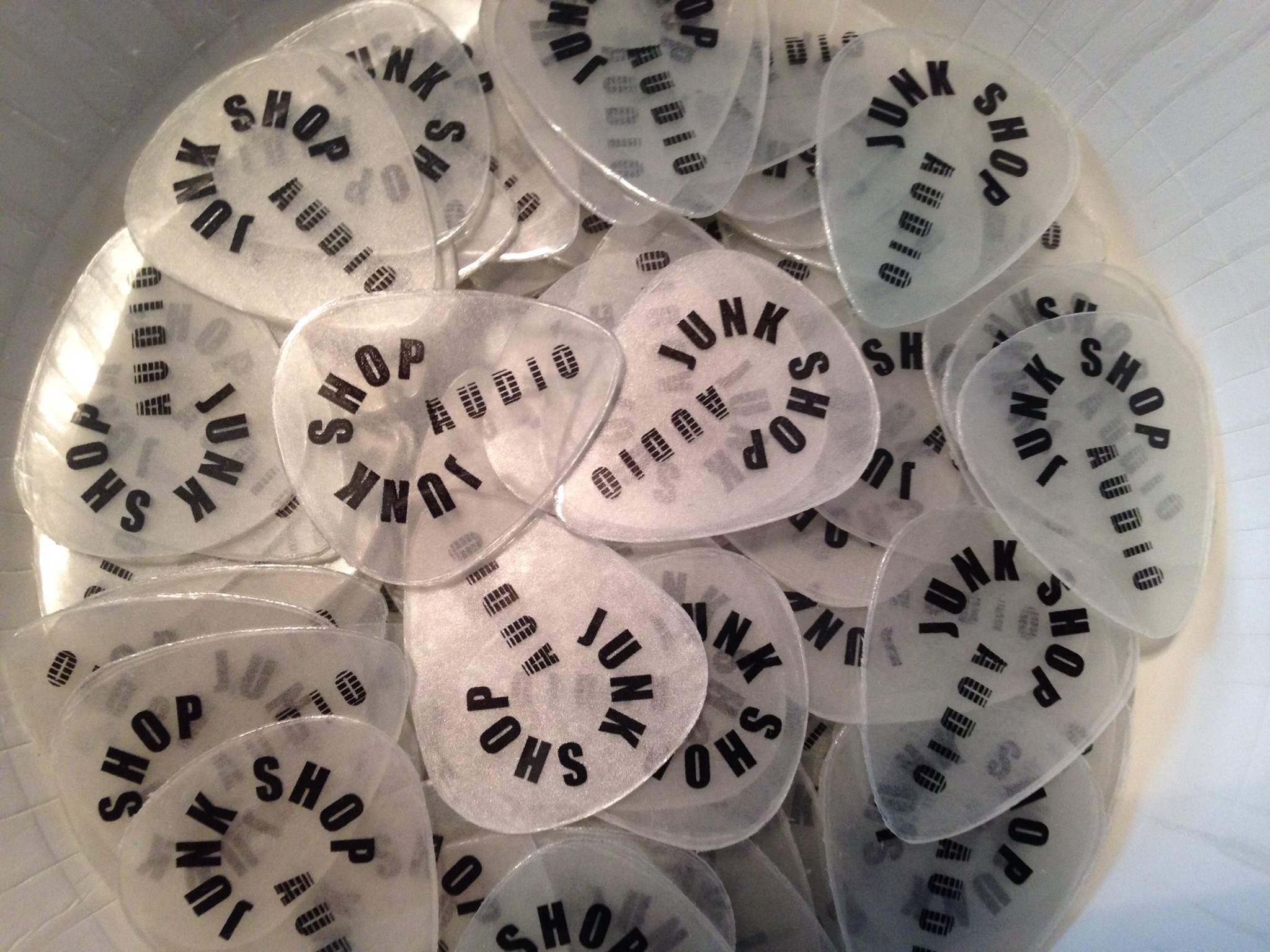
Homemade Promotional Guitar Pick Project

Homemade Guitar Picks

Hi,

Over the past few months, I’ve been
trying to get the word out about this site and recently entertained the idea of making homemade, promotional guitar picks to distribute. I believe I have stumbled upon a reasonable process and wanted to share it with you.

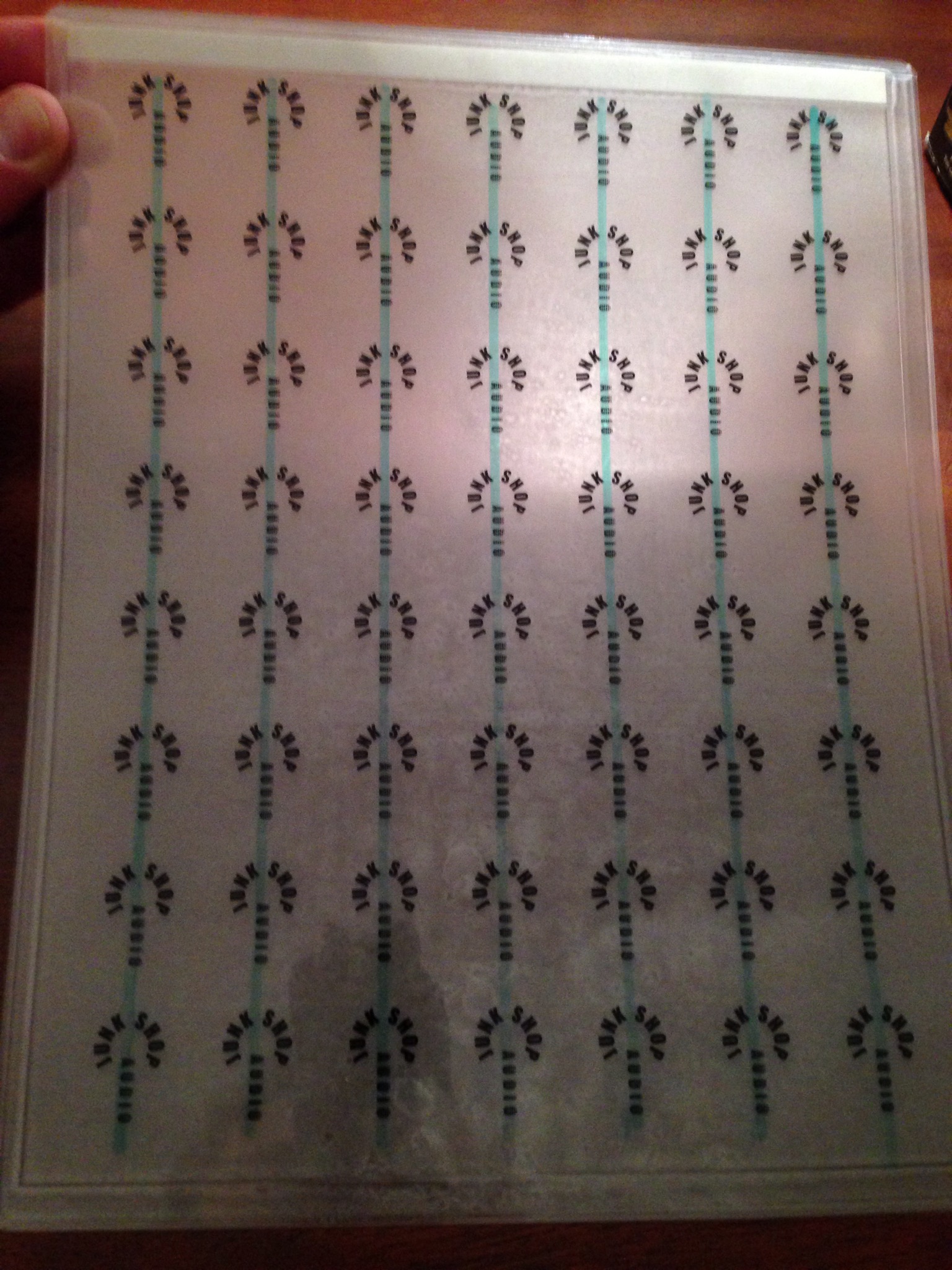
The process entails printing 56 pick-sized designs on a sheet of transparency film and then laminating it. After that, four laminating pouches are cut into eight separate sheets and are then laminated to the back of the primary sheet one at a time. Finally, the picks are harvested with a Pick Punch and finished with 600 grit sandpaper.

This project takes a little effort, but the final product is a very excellent, medium-gauge pick. Detailed instructions are in the works—in the meantime, have a look at the attached images.

Thanks,

uW5Z0b

IMG_2007.JPG
IMG_2009.JPG
IMG_2008.JPG
IMG_2024.JPG

Sneak Peek — First images of SlipStick Carry-On Electric Slide Guitar prototype

Hi,

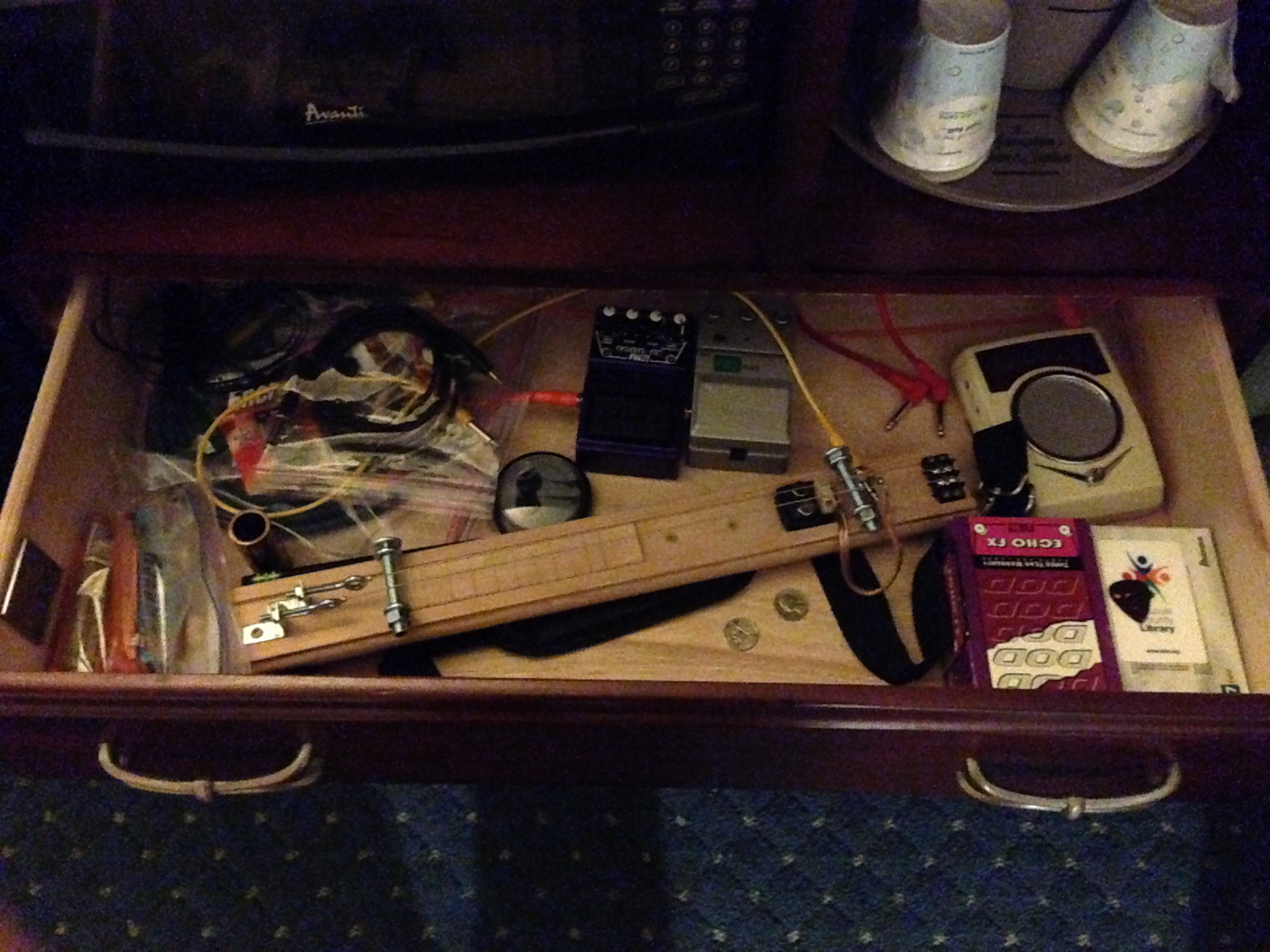
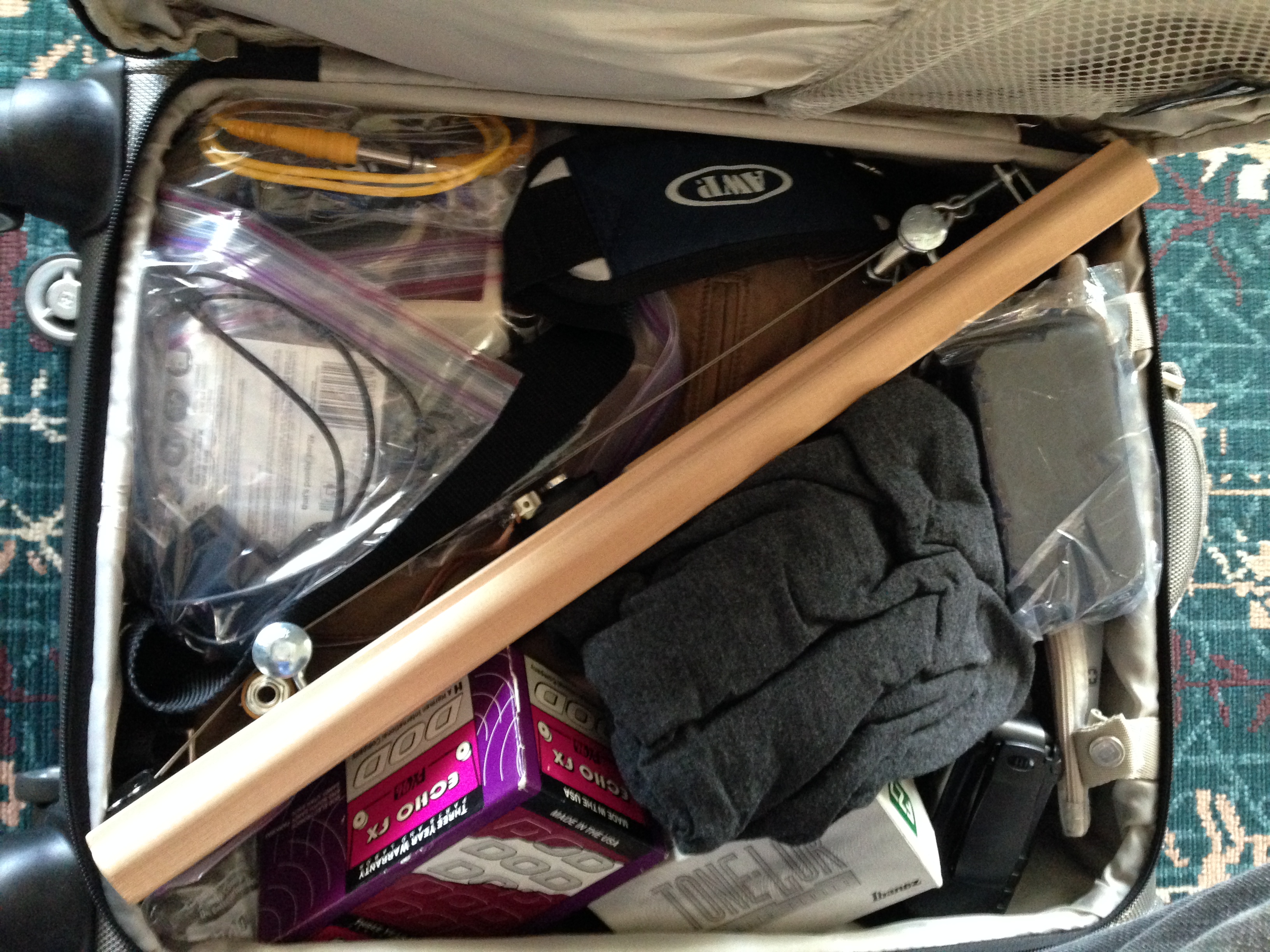
I’m here at Orlando Airport waiting for a flight back to St. Louis. I was at a management seminar over the past few days and had originally designed this guitar for the trip, so that I would have an instrument to play during the down time.

I call it a carry-on electric slide guitar because it is 20 inches in length and designed to fit diagonally across a carry-on sized suitcase. It worked well and though I brought a distortion pedal and mini amp, I really only needed my iPhone, the GarageBand app, an iRig interface, and a pair of headphones.

The bench image is early, as I have since moved the strings closer together and added a 1/4″ jack, but I will likely install three strings on the on the finalized model.

There will be more to come.

photo 1.photo 1photo 2

uW5Z0b

December Project — 9 Volt Power Adapter Guitar Pickup

Hi,

December’s project is a high output/low noise guitar pickup, constructed of two power adapter coils, four metal picture hangers, a handful of neodymium magnets, and some electrical tape. This project comes in under $20 and can be modified to fit a number of applications— whether it’s a replacement pickup for a stock guitar or a home build like the six-string steel guitar I’m working on or even a four-string cigar box guitar.

I’m excited to release this versatile pickup design and am extremely happy with the results thus far. It’s stereo capabilities and compact design offer numerous options and I am convinced that further exploration will reveal many more useful applications.

Check out our other fun projects in the menu above and don’t hesitate to comment or contact us if you have questions, concerns, or need advise regarding a project.

Follow the link to this month’s project: https://junkshopaudio.com/9-volt-power-adapter-guitar-pickup/

uW5Z0b

November Project: PVC Mic Shock Mount

Hi,

November’s project is a microphone shock mount that can be made from common materials for under $20. This is a great project for anyone who records sound in varying conditions or someone who desires to get his or her feet wet in elementary building/fabrication.

Check out our other fun projects in the menu above and don’t hesitate to comment or contact us if you have questions, concerns, or need advise regarding a project.

Follow the link to this month’s project: https://junkshopaudio.com/pvc-mic-shock-mount/

uW5Z0b